
Azo dyes represent one of the most significant classes of synthetic colorants, extensively used across industries such as textiles, plastics, inks, and food. However, traditional batch manufacturing processes often face challenges related to safety risks, inefficient heat and mass transfer, and inconsistent product quality.
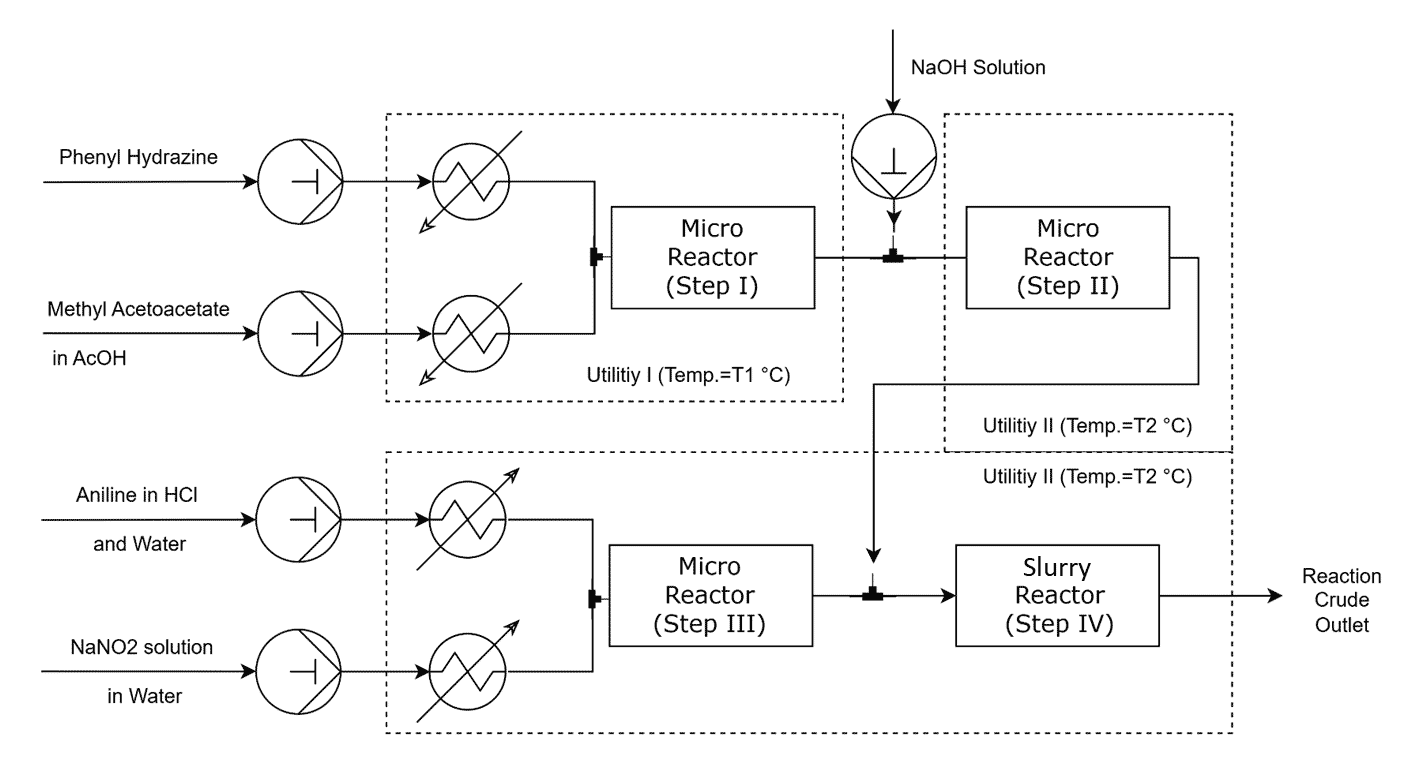
A continuous telescopic workflow was implemented using Amar-made MicroFLO™ reactors for the preparation of the coupler and diazonium salt, followed by the azo coupling step in a SlurryFLO™ reactor. This setup allowed hazardous and highly exothermic reactions to be handled in a safer, continuous manner while maintaining precise control over reaction parameters. The process was further optimized through the ReactWise software platform, which employed machine learning to identify optimal conditions, reduce experimental workload, and generate advanced process analytics.
A parameter importance plot revealed that coupling temperature (CTemp) and the molar ratio of sodium nitrite to aniline were the dominant factors, contributing 27.0% and 25.3% of model variance, respectively. Identifying these critical variables is essential, as it allows us to carry these learnings forward to refine and streamline future campaigns.
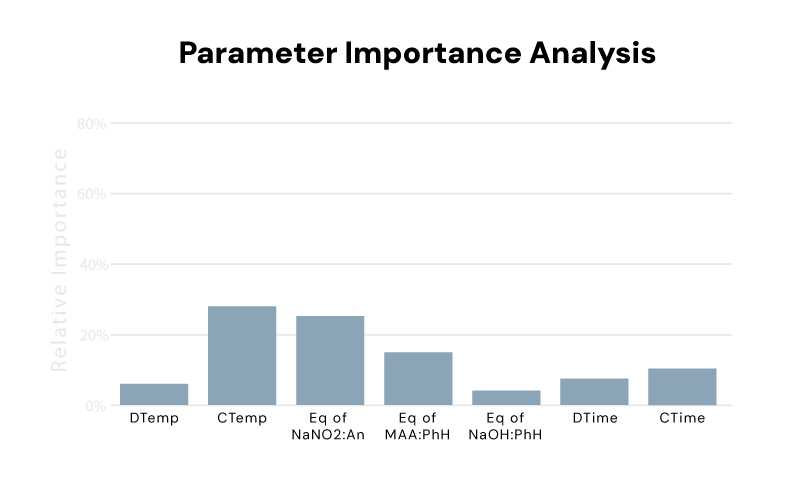
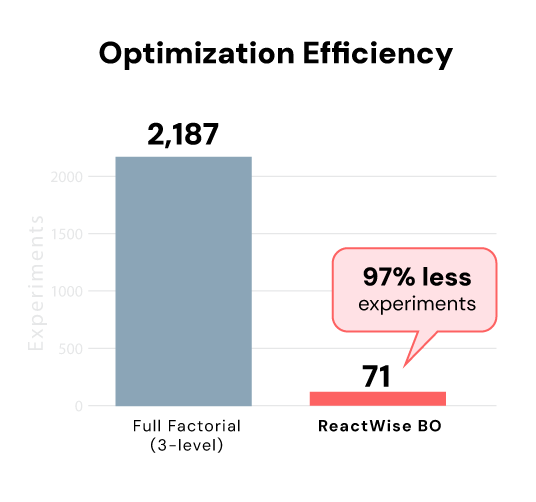
We reduced the number of experiments to 71, compared to a full factorial design (2,187), while still uncovering non-linear dependencies and narrow operating windows that would be difficult to identify using traditional methods.