
ReactWise recently partnered with Pfizer to demonstrate how AI can accelerate chemical process development in complex, multi-objective environments. In this case study, the team tackled the challenge of optimizing a hydrogenation temperature profile to maximize yield while minimizing impurity across a highly interdependent design space.
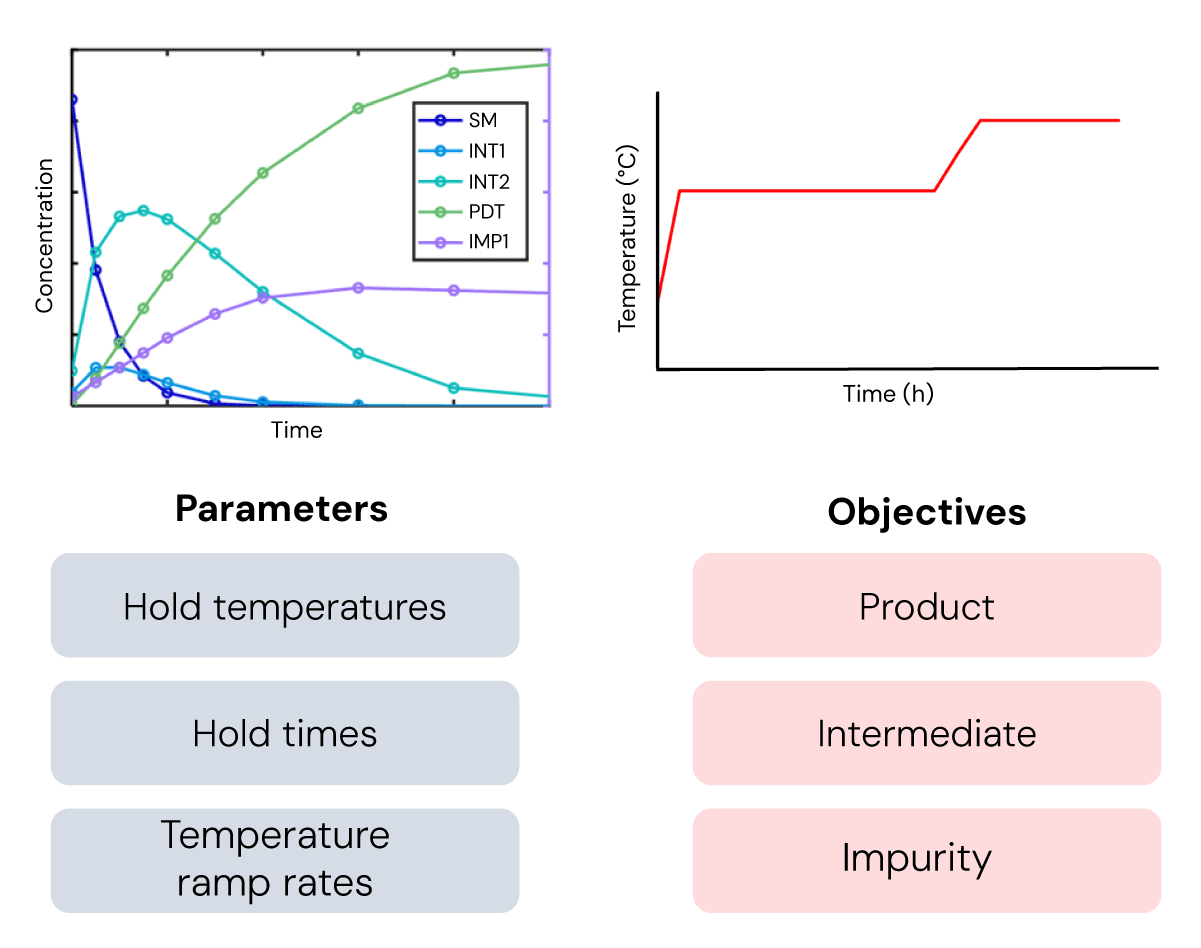
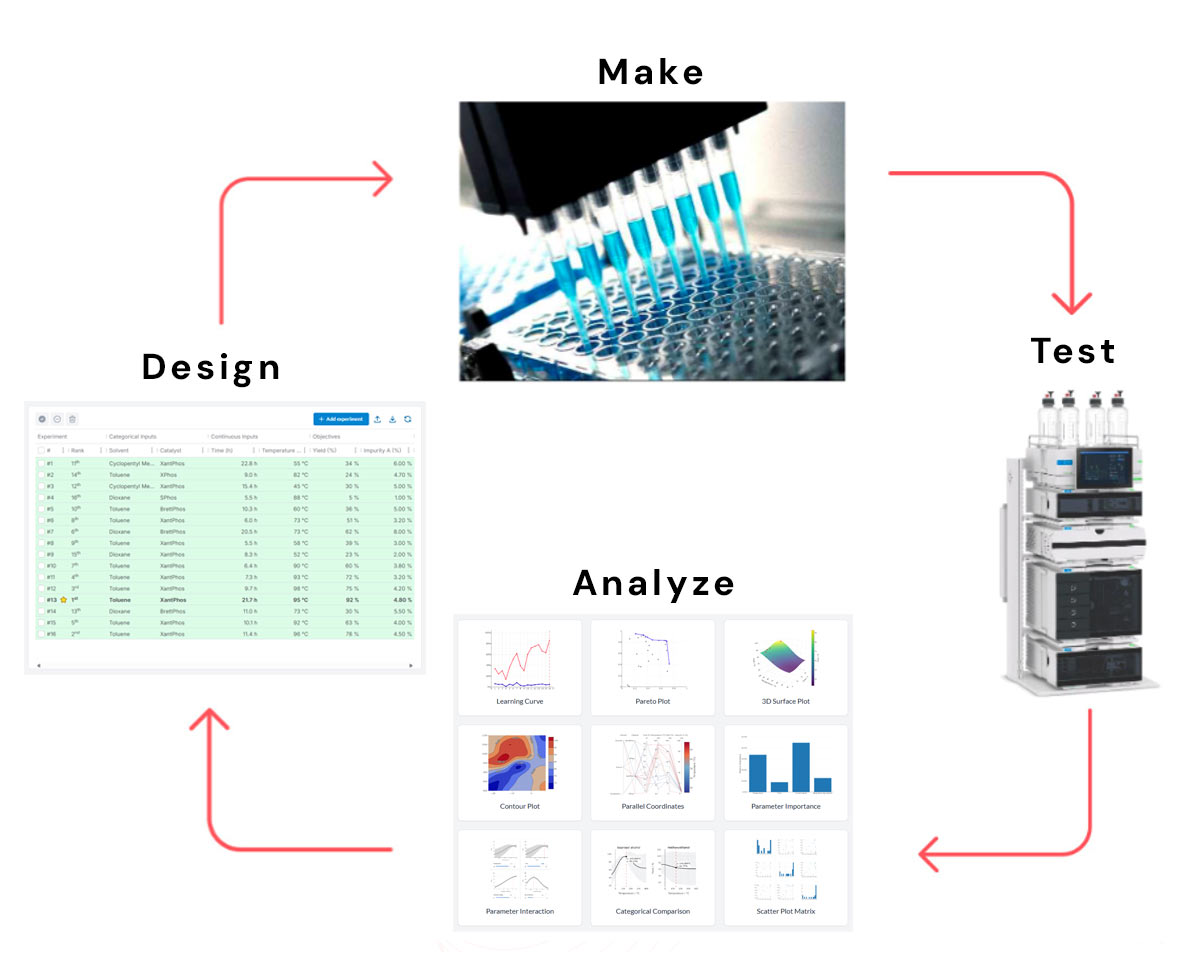
Using an iterative multi-objective Bayesian optimization workflow, ReactWise efficiently explored broad operating ranges and identified the process variables with the greatest influence on performance. By optimizing hold temperatures, hold times, ramp rates, and the full time-temperature profile together, the team rapidly converged on the most promising operating region.
The study achieved an outcome of 97.5% yield with 1% impurity, demonstrating measurable real-world value for process optimization. It also revealed a critical temperature-profile parameter that materially influenced performance, highlighting how AI can enable faster learning, smarter experimentation, and better outcomes for scientific teams.