When you’re running a library of 96 different reactions on one plate, 25% yield in 70 wells beats 60% yield in six. We’ve built the plate designer for general reaction conditions.
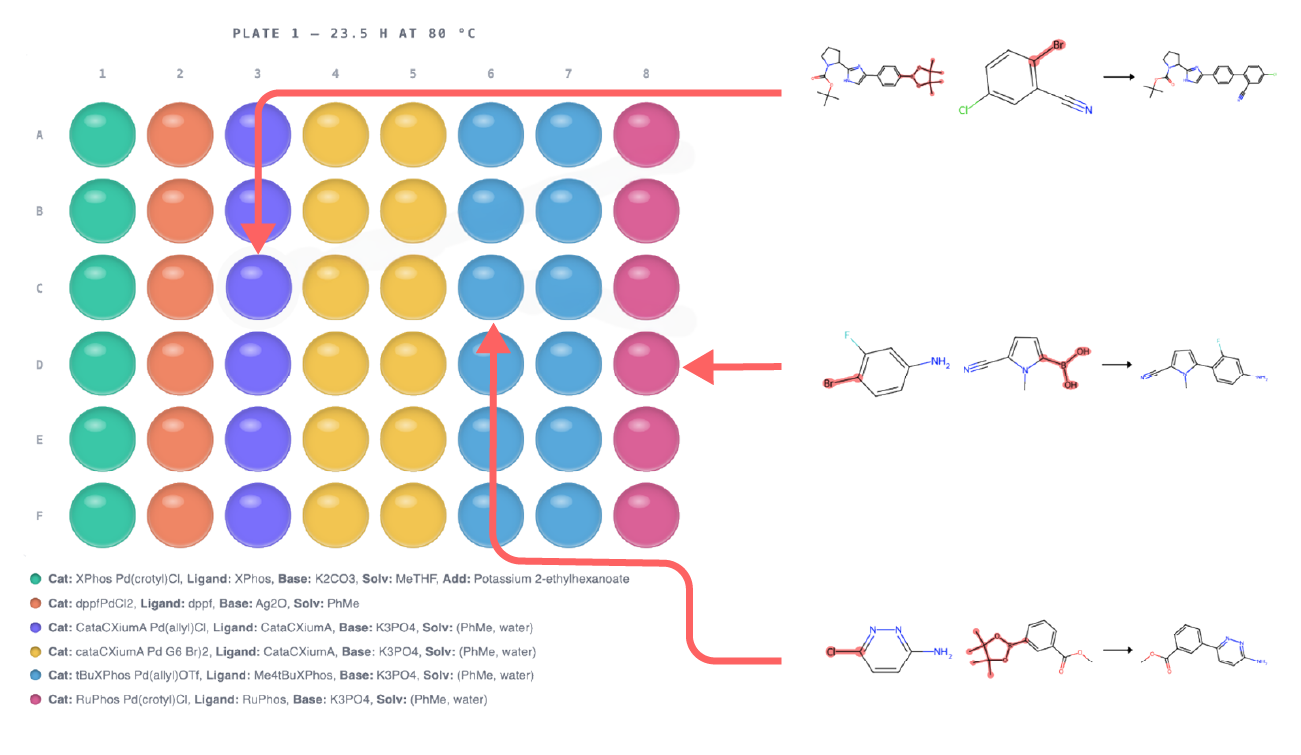
When you’re running a library of 96 different reactions on one plate, 25% yield in 70 wells beats 60% yield in six. We’ve built the plate designer for general reaction conditions.
Library synthesis inverts the usual objective. Most optimization asks what conditions give the best result for one transformation.
A library plate asks something else: what set of conditions gets usable material out of as many different substrates as possible. A brilliant result in one well doesn’t help if the rest of the plate is empty.
So the first problem is generality. The conditions have to be mediocre everywhere rather than excellent somewhere, which is a different thing to optimize for and not what most tools are built to do.
The second problem is that chemistry isn’t the only constraint. A plate has to be executable. If every well needs its own base, solvent, and catalyst, nobody is running it - or someone is pipetting it by hand for a day.
Conditions have to be clustered so that variations fall along rows or columns in a way a liquid handler can actually dispense.
That’s a layout problem sitting on top of a chemistry problem, and the two constrain each other. The best general conditions might not cluster cleanly. The cleanest layout might cost you coverage.
@ReactWise now handles both together. It proposes general conditions for the substrate set and arranges them into a machine-executable layout.
Two challenges, one design step.
Read more here: https://www.reactwise.com/hte-plate-design