
The optimization algorithms are ready. The systems around them need to catch up.
The optimization algorithms are ready. The systems around them need to catch up.
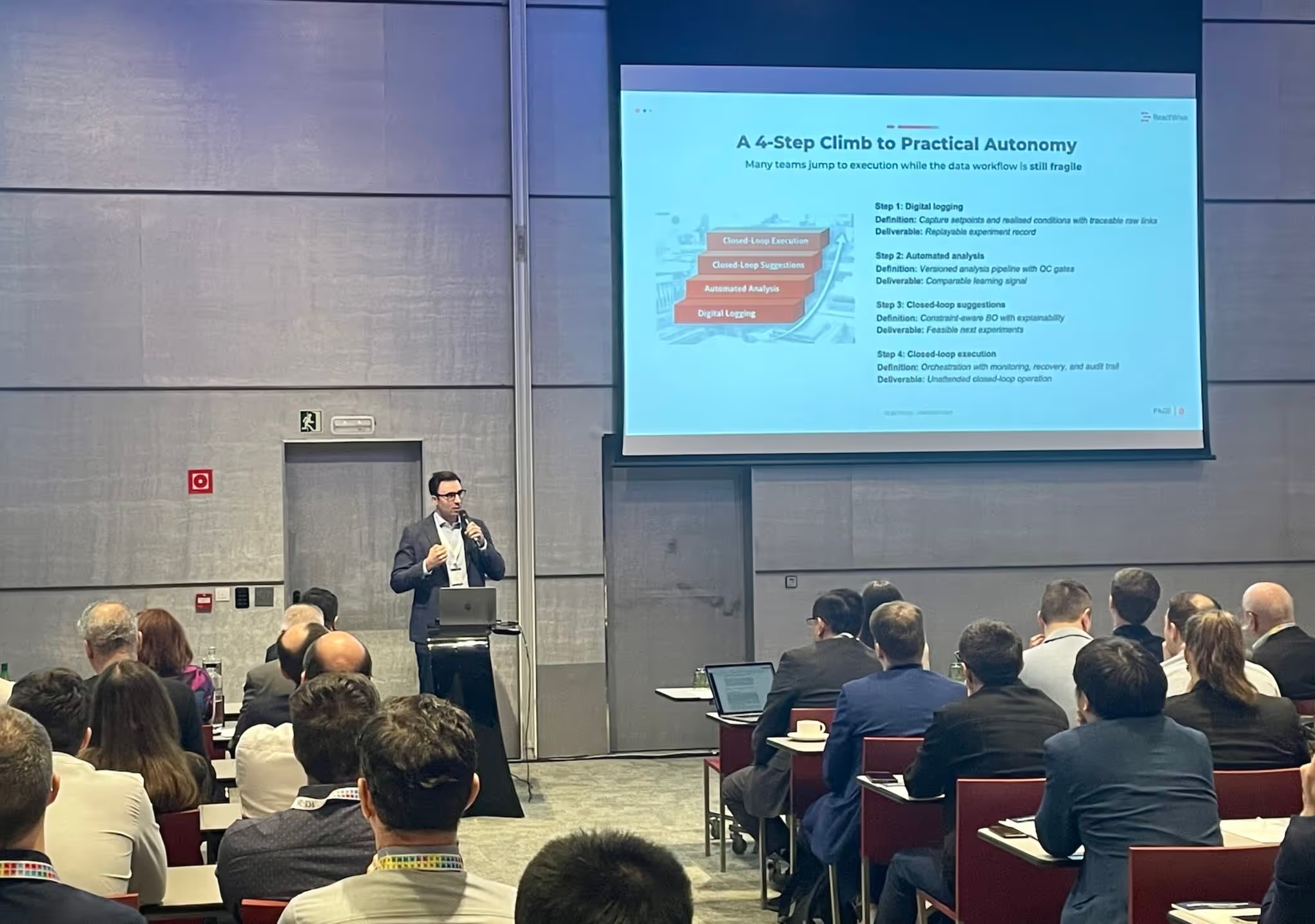
Last week I had the privilege of speaking at Flow Chemistry Europe 2026 in Málaga - a big thank you to the @Flow Chemistry Society for organizing such an excellent conference.
Within chemistry, I believe the flow & automation community remains one of the most open, forward-thinking groups when it comes to embracing new technologies. That makes conversations like the one I want to share here possible.
Algorithms like Bayesian optimization have been around for decades. And they work. But for chemistry, I believe, the bottleneck has never really been the algorithm. It's the system around it - the reliability of the hardware, the traceability of the data, the robustness of the analytics pipeline.
A loop you can't reproduce is a loop you can't learn from.
In my talk I argued that true autonomy in flow chemistry isn't something you jump to. It's something you earn, bottom-up, across three horizons:
- Trust first. Capture not just what you set, but the realised conditions along with versioned analytics.
- Acceleration. When campaigns stop being isolated and start informing each other, your historical data stops being a record of the past and becomes a competitive advantage.
- Autonomy. Multi-agent workflows where each agent masters one part of the system - optimization, reactor control, analytical QC - and together they close the loop for you.
This is exactly what we are tackling at @ReactWise.
Reliable learning enables reuse - and reuse compounds into autonomy.