
The moment a process chemist trusts AI for the first time…
The moment a process chemist trusts AI for the first time…
It's always the same story.
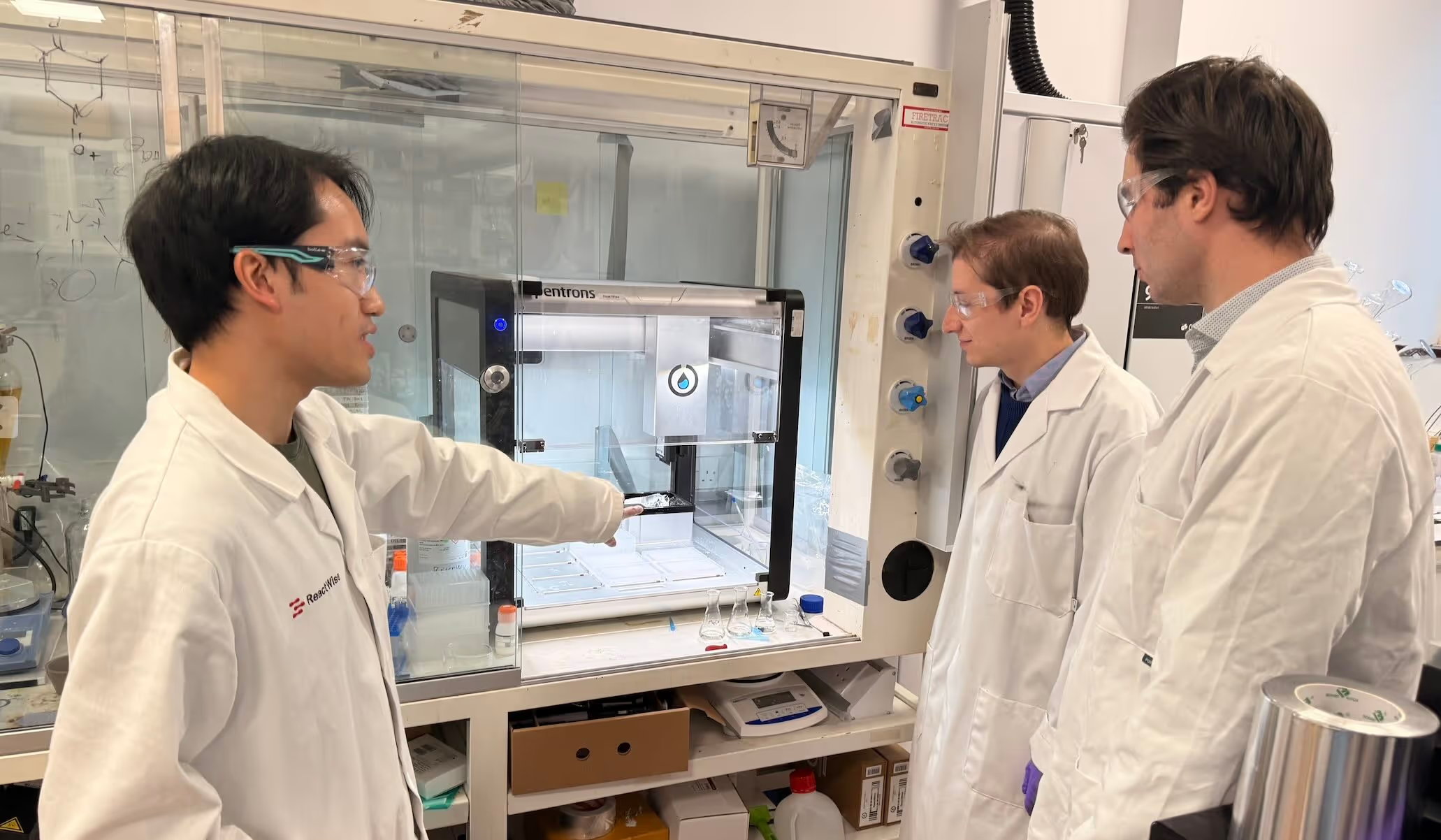
When we first start working with a new customer at Reactwise, the chemists are skeptical. Politely skeptical - but skeptical.
They've seen software promises before and were disappointed. They know their process and all its real-world limitations better than any algorithm. They've been optimizing it for months, sometimes years.
They're right to be cautious. Domain expertise is hard-earned and it should be respected.
But then something happens.
It's usually subtle. Our platform surfaces something previously hidden - for example the root cause of a complex impurity formation, or a setpoint adjustment that, on paper, seems counterintuitive but exceeds KPIs.
That's the moment.
Not a dramatic revelation. Just a quiet shift from "I'm watching this" to "this is actually useful."
I've seen this happen more times than I can count. And every single time, it follows the same pattern - initial skepticism, a result that makes them pause, and then a conversation that goes much deeper than the demo ever did.
What we've learned at Reactwise is that the goal isn't to replace the chemist's judgment.
It's to give them a system that remembers everything, learns across every run, and surfaces what a human mind - no matter how experienced - simply can't hold in parallel at once.
Transfer learning across historical data isn't magic. It's just applied respect for what your team already knows.
The trust follows from there and so does the result. This is exactly why our clients keep extending their licenses and deepening their work with us year after year. When a tool genuinely makes your team better, the decision to stay is easy.
If you're still on the fence about whether AI belongs in your process chemistry workflow - that's okay. So were most of our best customers, once. Reach out, and I'm happy to show you what changed their mind.