
No-code vs low-code in the lab: Why we prioritize simplicity
No-code vs low-code in the lab: Why we prioritize simplicity
Low-code platforms are popular for good reason: they are powerful, flexible, and highly configurable. In the lab, however, that flexibility can translate into friction.
At ReactWise, we support chemists optimising complex reactions. Most users are not software developers; they design experiments, troubleshoot instrumentation, interpret HPLC data, and manage workflows under tight time constraints. Given that, we believe that no-code can outperform low-code when implemented well. Here are some of the the principles that guided our design:
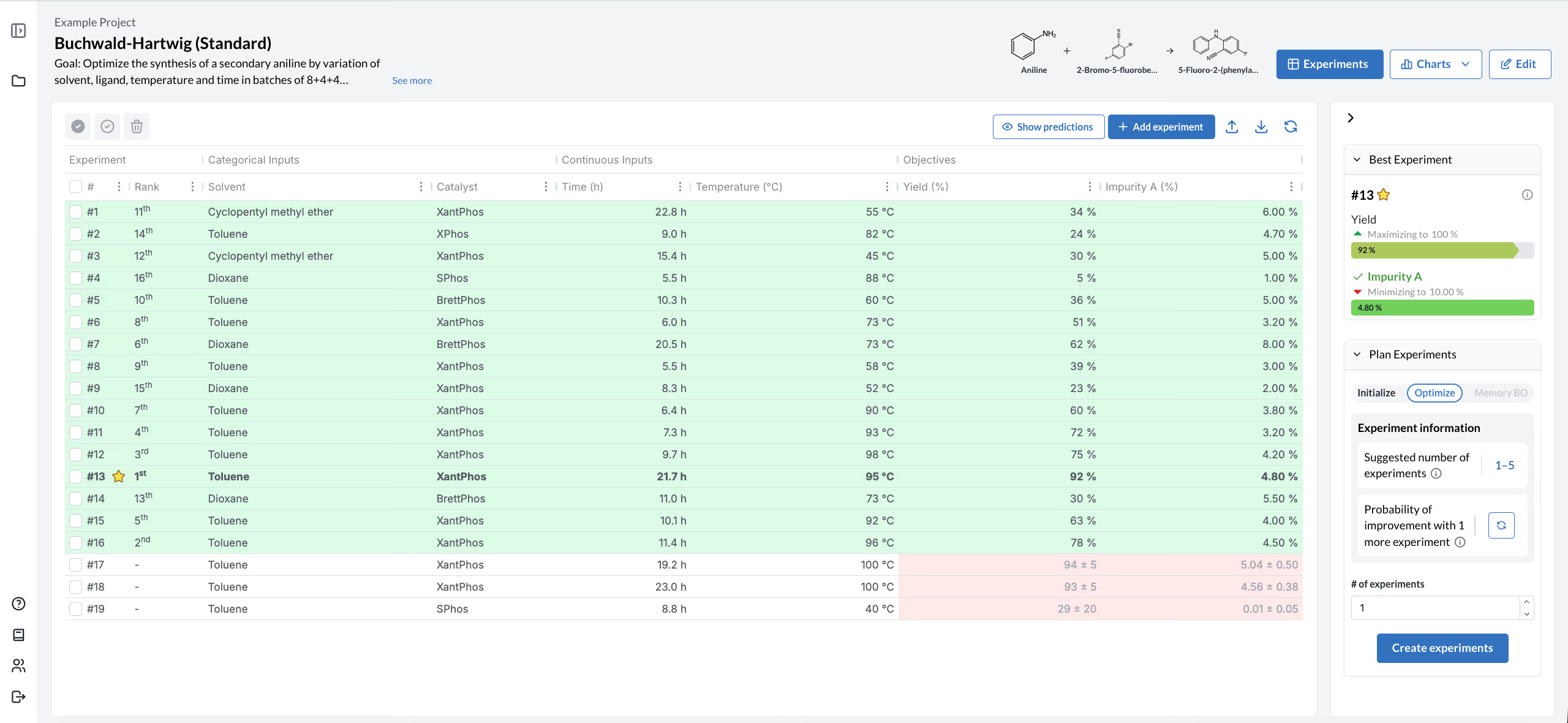
“The user interface needs to be simple to navigate complex reaction optimizations.”
There is a real trade-off between configurability and ease of use. While this means a no-code platform can’t cater to every eventuality, the goal is to guide users through robust optimization, not use up time designing unnecessarily elaborate methods. Where more bespoke solutions are needed, a full suite of API integrations is available.
Finally, if users are not writing the code, they still need to understand how decisions are made. That is why we invest in visualization-driven interpretability that makes model behaviour understandable.
ReactWise is being built to be both technically rigorous and practical for day-to-day lab work.
This lets us provide experimental recommendations with just a few clicks.