
Glass well plates for process chemistry
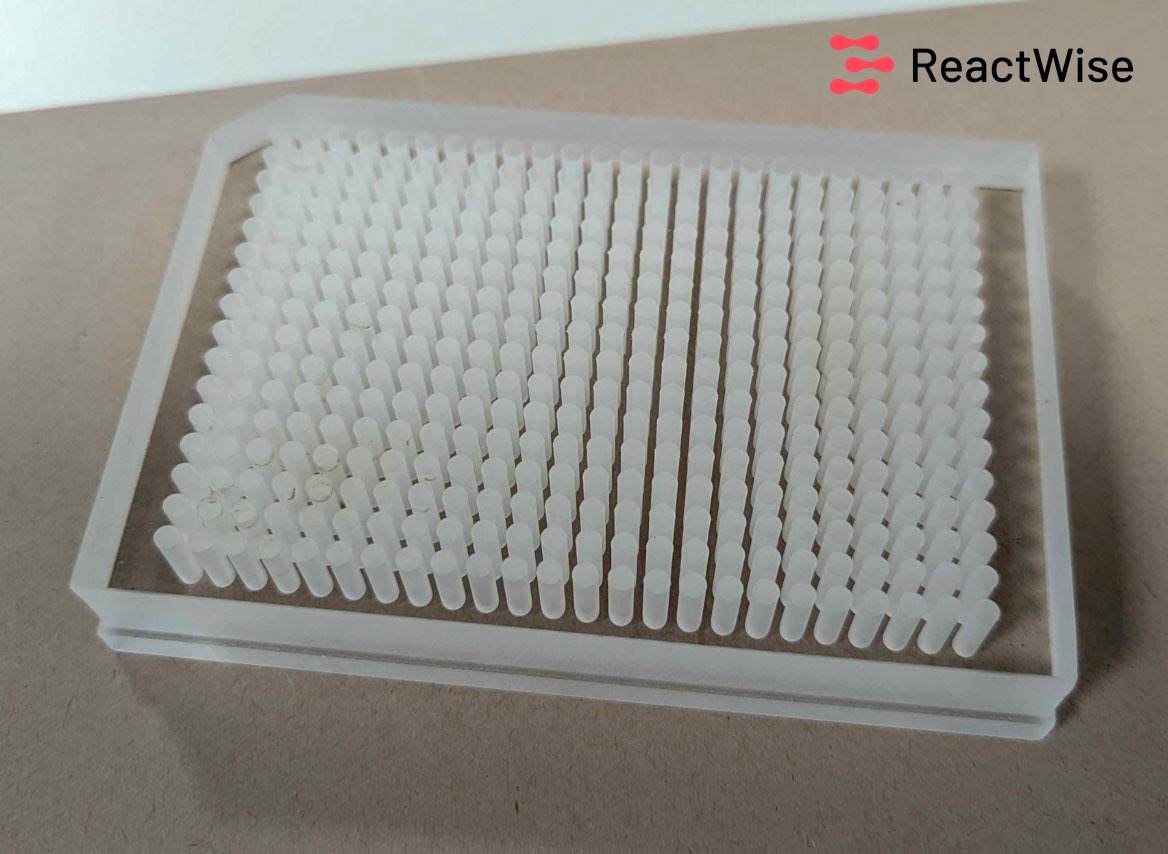
The 384 plastic well-plate on your bench probably can't hold toluene.
High-throughput experimentation runs on 24- through 1536-well plates - but standard plastic, such as polypropylene or polystyrene, isn’t compatible with many of the solvents that matter most in process chemistry. Toluene, dioxane, and much of the industrially relevant list will swell, leach into, or degrade a plastic plate, quietly narrowing the chemistry you can screen.
We kept hitting this in our own HTE lab. So we started developing glass plates - these are now available through our website.
Made from borosilicate or quartz, in standard 96- and 384-well formats, they can handle the full range of process-relevant solvents. Because they're reusable, one plate replaces a stack of single-use plastic - cutting both waste and cost per screen.
They drop into your existing setup - compatible with all the standard equipment you already use for 96/384-well chemistry - and every plate ships with a sealing kit.
Same throughput. The solvents you actually need. Far less plastic in the bin.
Find more information here: shop.reactwise.com