
Enzymatic reactions are notoriously complex to optimize. We just reduced the experimental burden by 66%.
Enzymatic reactions are notoriously complex to optimize. We just reduced the experimental burden by 66%.
Biocatalysis is one of the most exciting frontiers in pharmaceutical process development - cleaner, more selective, and increasingly viable at scale.
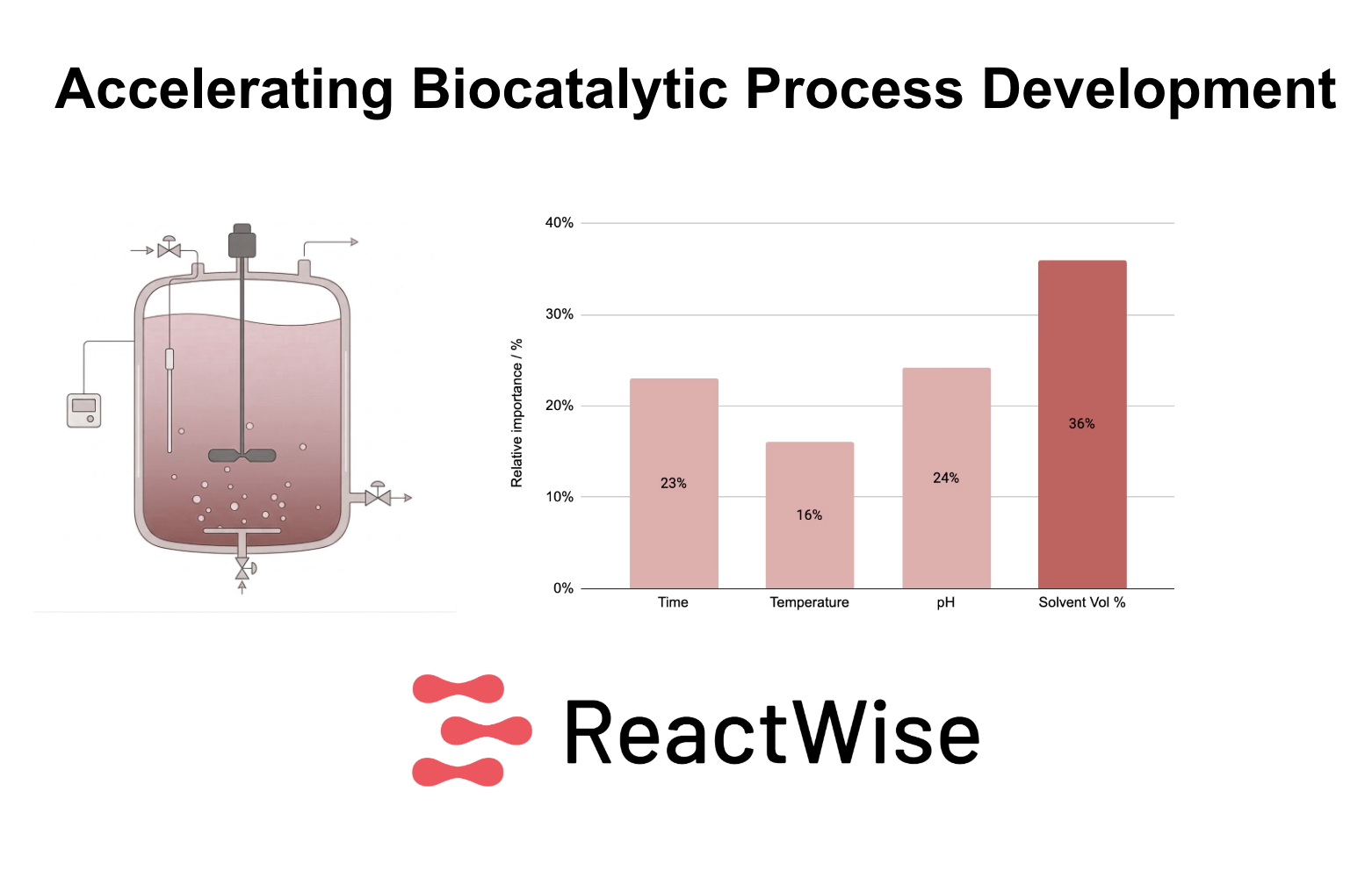
But optimizing enzymatic reactions comes with its own complexity. Four interacting variables (time, temperature, pH, solvent volume) and historically 30 to 40 experiments just to find the right operating region.
We recently partnered with a global top-5 pharmaceutical company to put ReactWise to the test in exactly this environment.
The target was 15 experiments to hit 95% yield. We got there in 12 experiments.
This is a 66% reduction in the number of experiments and time compared to conventional approaches.
Our platform also surfaced the most influential parameters, ranked process inputs by impact, and gave the team a clear picture of not just where the optimum is, but why.
That's the difference between a tool that finds an answer and a platform that builds understanding.
@ReactWise works across metal-catalyzed reactions, biocatalytic systems, and beyond - bringing data-driven optimization, advanced visualization, and deep process insight to every reaction class your team is working on.
Full case study in the first comment.