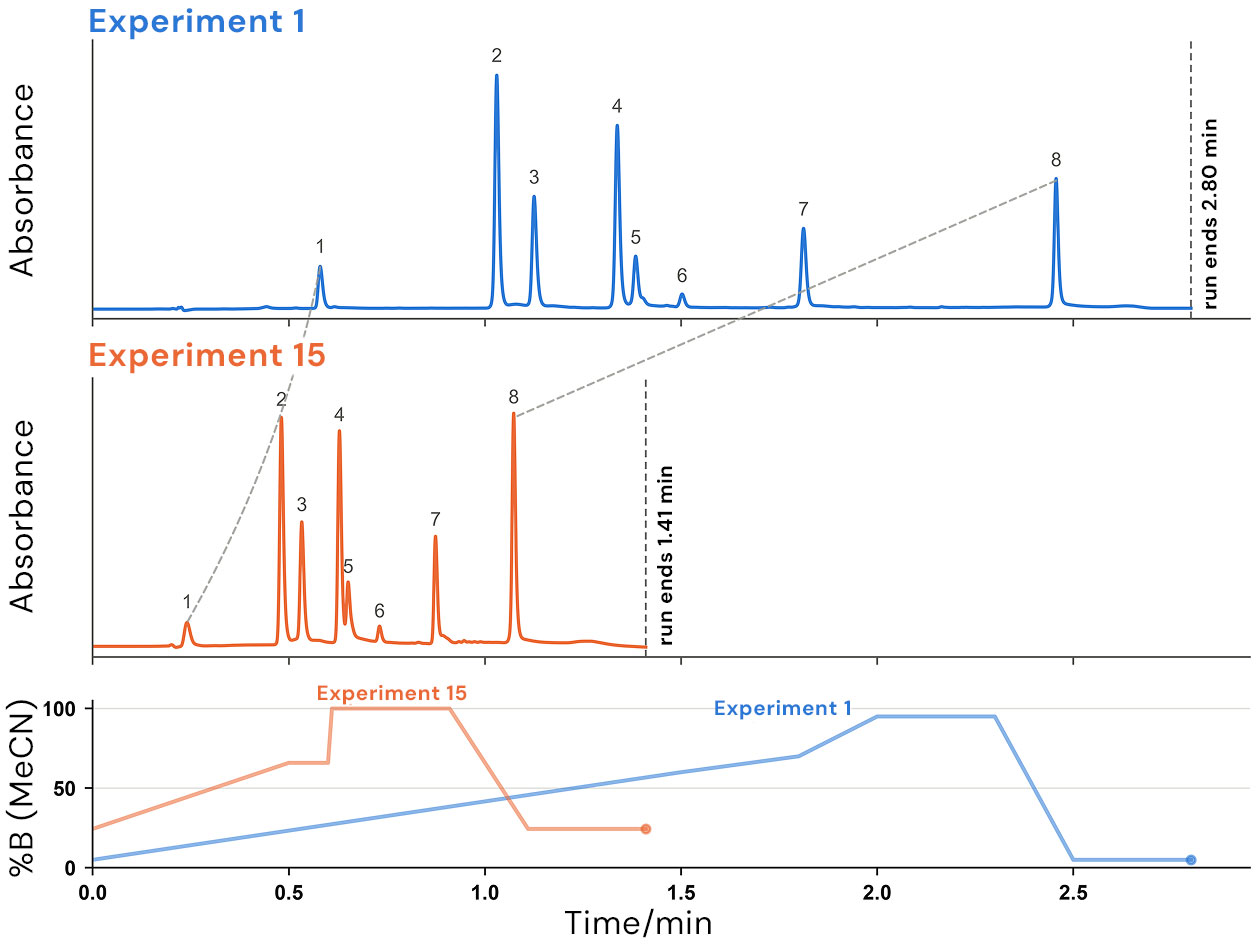

Analytical method development is a multi-objective problem. For the analysis of high-throughput experiments (HTE), suitably fast gradient methods must be developed which separate compounds, retain good resolution, and complete the analysis rapidly. The analysis of a typical 384-well plate using unoptimised 3-minute methods requires more than 19 hours of analysis time, which can pose the largest bottleneck to a HTE workflow. To explore these trade-offs efficiently, ReactWise was applied to optimize an eight-component test mixture on an Agilent 1290 Infinity III UHPLC system.
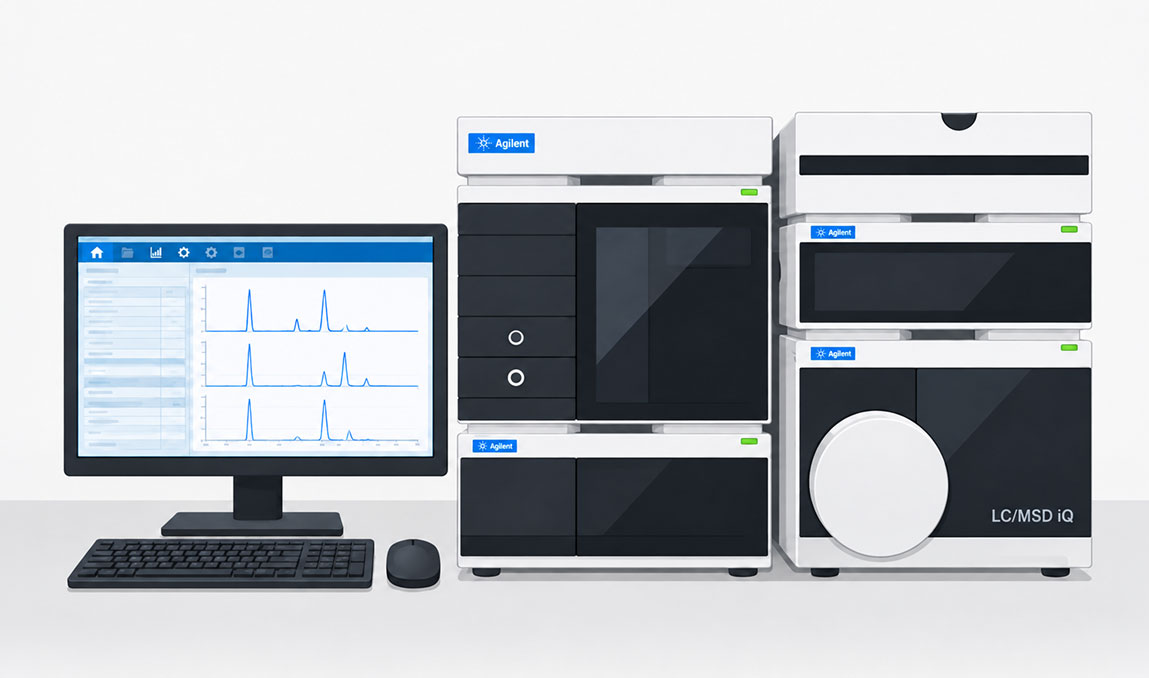
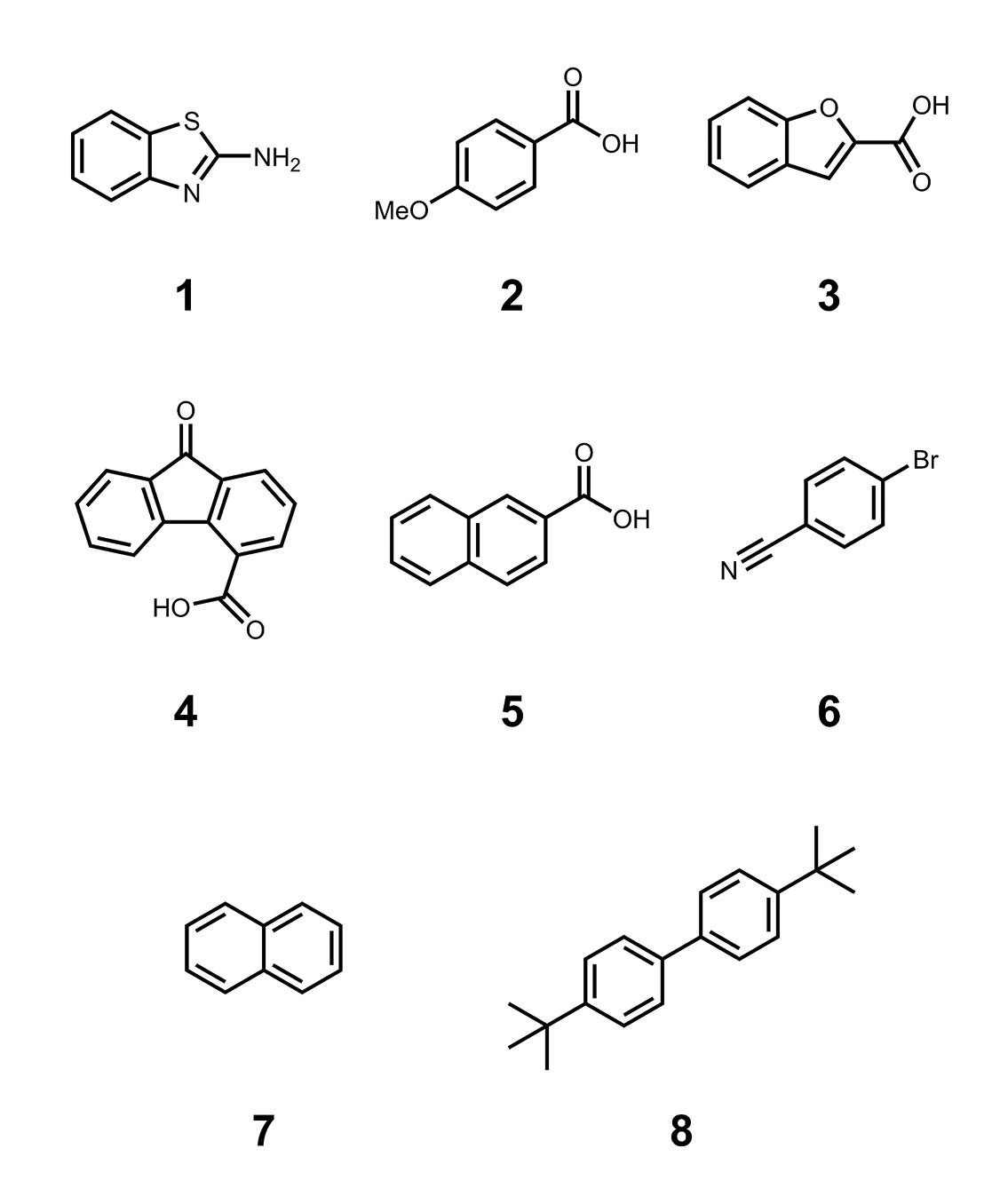
ReactWise was used to develop a rapid UHPLC method for an eight-analyte mixture. Eight continuous method parameters were optimized: the initial mobile-phase composition, the times and compositions of two gradient setpoints, and the length, start time and composition of the final hold. Performance was assessed against four objectives: the number of resolved peaks, resolution of the critical pair, retention time of the final peak, and total method time, with greater weight placed on the number of resolved peaks (36% vs 21% for each of the other objectives).
ReactWise turned the gradient into a flexible, modelled design space. Rather than exhaustively screening every combination, the campaign used the results of completed runs to focus subsequent experiments on informative and promising regions. The approach allowed steep and non-linear profiles to be assessed while respecting the timing and composition constraints of the UHPLC system.
Across 16 recorded runs, later experiments progressively compressed the gradient and moved the final analyte earlier while continuing to track separation performance. This kept the trade-off between speed and chromatographic quality visible throughout development.
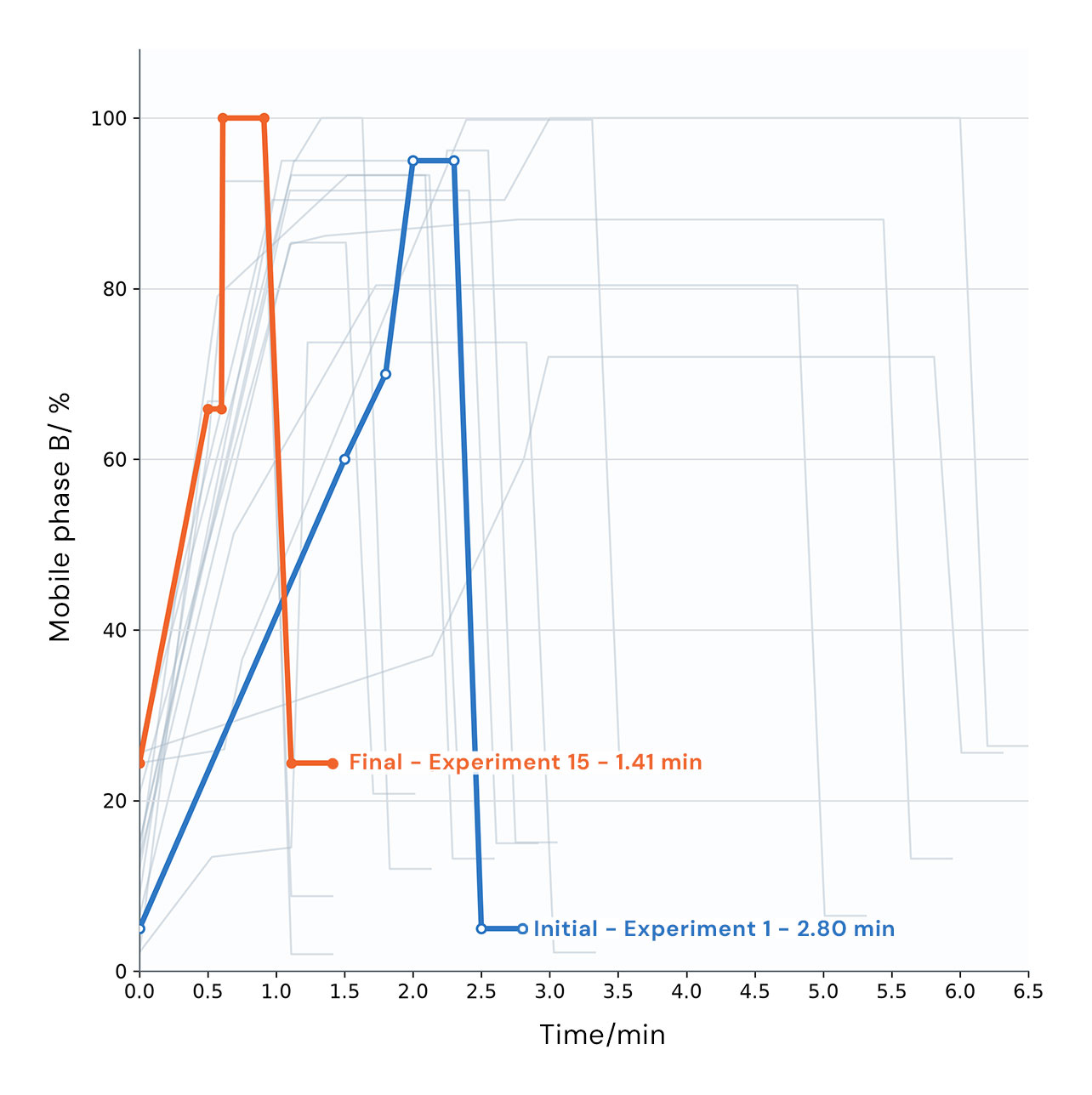
Shorter UHPLC methods increase throughput, reduce solvent use, and return results sooner. ReactWise rapidly identified an optimized gradient that reduced runtime by 50% while retaining separation of all eight analytes, as illustrated in the figure.